



Cleanroom cleaning, decontamination, and maintenance
The TRU approach
Cleanroom cleaning may seem straightforward, but appearances can be deceiving. A cleanroom can look spotless and still not be up to code. That's because cleanroom cleaning isn't a routine cleaning job. A cleaning step performed out of sequence, the wrong materials, a missed procedure, or improper operator behavior can all compromise contamination control. The consequences can be significant—from failed audits and production disruptions to compromised product quality.
That's why cleanroom cleaning isn't just another item to tick off a maintenance checklist. It's a carefully controlled process that brings together cleaning, disinfection, preventive maintenance, documentation, validation, and training. Keeping a cleanroom under control requires more than just cleaning alone. It calls for people who understand the environment, procedures that work in the real world, and materials selected to minimize contamination risks. That's where TRU stands out.
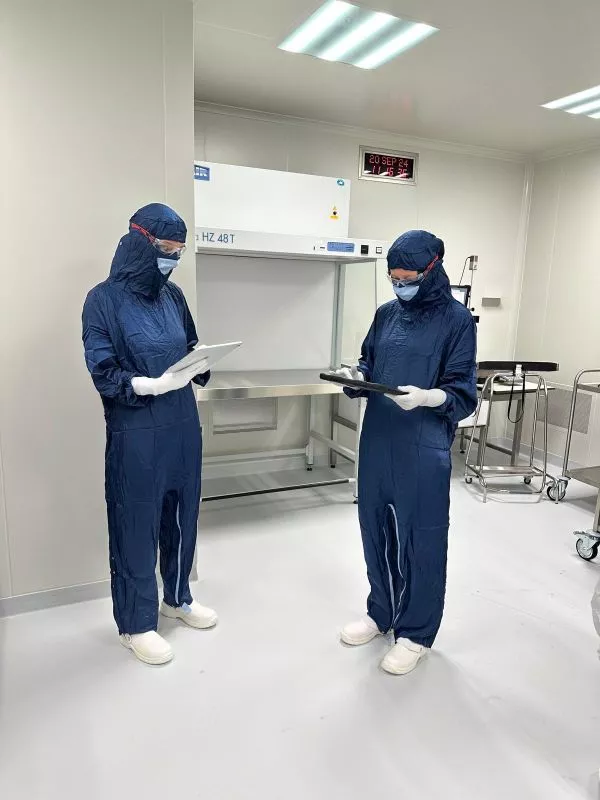
Why cleanroom cleaning is about more than cleaning
In an office or manufacturing facility, cleaning mainly involves removing visible dirt and dust. A cleanroom is different. The biggest risks are usually invisible. Airborne particles, microorganisms, residues, inappropriate cleaning materials, and gowning mistakes can all compromise environmental control.
At TRU, cleanroom cleaning always starts with three questions:
- What are the contamination risks?
- Which cleaning procedures, frequencies, and materials are needed to control those risks?
- How do we show that the process is being carried out correctly and consistently?
Cleanroom cleaning: process and critical control points
Effective cleanroom cleaning starts with a thorough assessment. At TRU, we call this critical cleaning. We start by developing a cleaning and disinfection program based on a careful evaluation of the cleanroom environment. That program defines responsibilities, tasks, cleaning frequencies, materials, and methods.
Possible steps in a cleanroom cleaning process
- Analyze the environment
What are the critical zones? Which activities are being carried out? What risks are associated with the people, materials, products, and flows? - Define the frequency
Some zones need to be cleaned more often than others. Maintenance schedules should match the cleanroom classification, usage, production activity, and associated risks. - Determine the right method and sequence
The cleaning sequence is crucial to avoid cross-contamination. Think: moving from clean areas to less clean areas, working from top to bottom, and following predefined routes. - Use the right materials and products
Cloths, detergents, and disinfectants should be tailored to the environment Using the wrong materials can actually make the problem worse instead of better. - Use trained personnel
Cleanroom cleaners should understand why each step matters. That’s why training, guidance, and supervision are so important. - Control and documentation
If it’s not on record, it didn’t happen. Documentation is a critical part of the process, especially during audits.
Cleanroom cleaning: what actually causes contamination?
Contamination is rarely caused by one big mistake. More often, it’s the result of small issues that add up over time. That’s what makes cleanroom cleaning so critical—every step has to be done right. Here are some of the most common mistakes.
Rushing the disinfection step
Cleaning and disinfection are two separate steps. First, you clean, which means removing visible dirt and residues. Only then can disinfection effectively target microorganisms. If you skip or rush the cleaning step, disinfection won’t be as effective.
Using the wrong materials
Not every cloth or cleaning agent is suitable for cleanroom environments. Materials that shed particles or leave behind residues can actually make contamination worse instead of better.
Not paying enough attention to behavior
People are one of the biggest contamination risks in cleanrooms. Gowning, movement, walking routes, and structured routines all play a major role in keeping the environment under control.
Poor documentation
Doing things right isn’t enough—you also need to be able to prove it. Without clear records, audit-ready compliance quickly becomes a problem.
Insufficient quality control
Procedures don’t just need to be written down; they need to be followed up, monitored, and adjusted where necessary.
Cleanroom maintenance: frequency, zones, and materials
Cleanroom maintenance is about more than periodic cleaning. It's about staying in control at all times. The right maintenance approach depends on a range of factors, from cleanroom classification and industry regulations, to production and research activities.
Zones determine the approach
Not every area requires the same level of cleaning. Critical zones, transition areas, gowning rooms, floors, walls, work surfaces, and equipment all require their own specific approach. That’s why a good maintenance program is always zone-specific.
Adjusting when needed
A cleanroom is a dynamic environment. New processes, maintenance work, incidents, staff changes, and audit results can all impact the cleaning program. That’s why cleanroom maintenance needs to be reviewed and adjusted regularly.
Choosing cleanroom cleaning agents
Using the wrong cleaning agent can leave residues, damage materials, or simply fail to deliver the required level of cleanliness. That’s why several factors need to be considered, such as:
- type of surface
- existing contamination risks
- required microbiological efficacy
- contact time
- potential residue build-up
- material compatibility
- regulatory requirements such as GMP or ISO standards
- practical usability in day-to-day operations
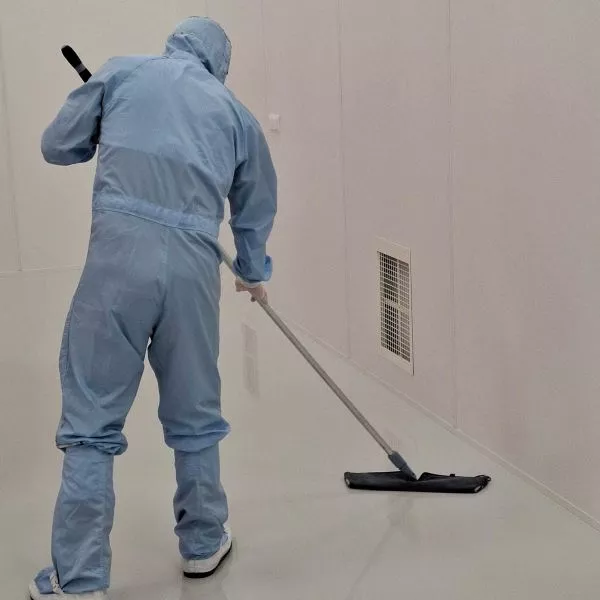
Cleanroom cleaning validation: what does it mean in practice?
Cleanroom cleaning validation means you can demonstrate that your cleaning process does what it’s supposed to do. Not just once, but in a way that’s repeatable and controllable. In other words: can you prove that your cleanroom cleaning is effective, consistent, and suitable for the specific environment?
Several aspects of the cleaning process play a role here, all of which need to be documented and justified. This includes the cleaning method, the materials used, the contact time, the frequency, and the order of execution. And that's not all: training, record keeping, deviation handling, and ongoing monitoring are just as important. If this sounds complex or outside your area of expertise, not to worry. TRU offers cleanroom cleaning validation as part of its consultancy services.
Cleanroom cleaning validation is especially relevant when setting up a new cleanroom, when processes change, when recurring deviations occur, and after an audit.
Cleanroom audit: a detailed check
During a cleanroom audit, inspectors don’t just check whether the room looks clean. They assess the entire system behind your cleanroom cleaning process. That means you need to be prepared. Last-minute cleaning won’t help.
Preparing for a cleanroom audit
During an audit, you can expect plenty of questions, such as:
- Is there an up-to-date cleaning and disinfection program?
- Are tasks and responsibilities clearly defined and assigned?
- Are cleaning frequencies established per zone?
- Are the right materials and cleaning agents being used?
- Have employees been properly trained?
- Is the process fully documented and traceable?
If this sounds overwhelming, you're not alone. Our consultancy services include a scan and audits to assess your cleaning procedures.
How can TRU help with cleanroom cleaning, decontamination, and maintenance?
TRU Global Solutions supports companies that want to organize their cleanroom cleaning in a professional, compliant, and risk-based way. Depending on your situation, TRU can step in at different levels.
TRU critical cleaning
Outsource your cleanroom cleaning to our specialized professionals. We take the pressure off your team with a tailored cleaning and disinfection program, supported by continuous quality control. Your cleanroom is cleaned by our trained cleaners, with on-site guidance and the right balance between outsourcing and operational continuity.
TRU consultancy
Need more support with procedures, validation, or cleanroom audits? We can guide and advise you and help you prepare for inspections and audits.
TRU Academy
Your team’s behavior plays a key role in maintaining cleanroom standards. TRU trains your staff in workflows, execution, contamination risks, and best practices—fully tailored to your operations and specific environment.
Want better control over your cleanroom cleaning?
TRU can develop an approach that fits your environment, industry, and risk profile, from cleaning programs to execution, validation, audits, and training.
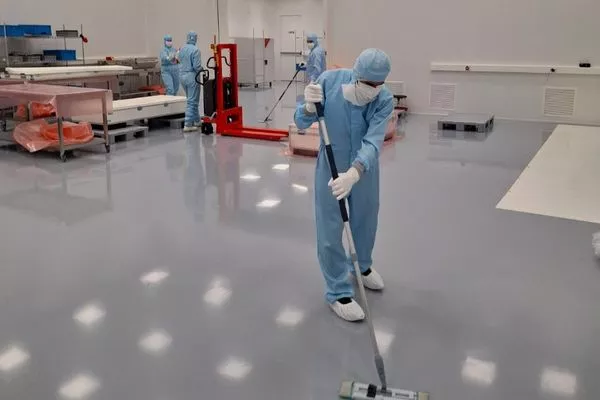
Cleanroom cleaning in practice: HQ Pack
HQ Pack, a Dutch company that specializes in industrial packaging for the high-tech sector, partnered with TRU to set up and optimize its cleanroom cleaning processes. Our structured approach to cleaning, disinfection, and contamination control delivered strong results: better process control, a consistent way of working, and a solid foundation for audits and quality inspections.
“With TRU, you know a deal is a deal. It’s a pleasure working with them.” (Toon Boogers, Production Team Leader at HQ Pack)
FAQ
What does GMP-compliant cleaning mean?
GMP-compliant cleaning is a controlled cleaning approach that meets the applicable GMP requirements and addresses the specific risks of a cleanroom. It’s not just about how the cleaning is carried out. Procedures, training, monitoring, and traceable documentation are just as important.
Is a visibly clean cleanroom GMP-compliant?
Not necessarily. Most particles and microorganisms can’t be seen with the naked eye. What’s more, GMP doesn’t just look at the cleaning result, it also considers how that result was achieved and how it can be demonstrated.
What’s the difference between cleaning and disinfection?
Cleaning removes dirt, residues, and contamination. Disinfection reduces or inactivates microorganisms. Proper cleaning is essential for a disinfectant to work effectively.
How often should a cleanroom be cleaned?
There’s no one-size-fits-all answer. The right frequency depends on the cleanroom classification, the activities carried out, the contamination risks, and the monitoring results.
Does GMP apply to every cleanroom?
Not every cleanroom needs to comply with GMP regulations. Depending on the industry, product, and activities involved, ISO standards or other specific requirements may apply instead.
Can cleanroom cleaning be outsourced?
Cleanroom cleaning can absolutely be outsourced to a specialized partner. Just make sure that responsibilities, procedures, training, documentation, and quality controls are clearly defined.
How does TRU support GMP-compliant cleaning?
TRU supports companies and organizations with services including risk and gap analyses, procedures, cleaning validation, training, specialized cleaning teams, and digital documentation and follow-up.
What’s the difference between cleanroom cleaning and regular cleaning?
Regular cleaning mainly focuses on visible dirt. Cleanroom cleaning is different. The biggest risks are often invisible: microorganisms, residues, and contamination from people and materials. That’s why cleanrooms require specific procedures, materials, training, and quality control.
What’s the difference between cleanroom cleaning and disinfecting?
Cleaning and disinfection are often mentioned together, but they serve different purposes. Cleaning removes dirt and residue, while disinfecting reduces the number of microorganisms. The order is critical: first clean, then disinfect. A disinfectant is far less effective on a dirty surface.
How often should a cleanroom be cleaned?
There’s no one-size-fits-all answer. The right frequency depends on the cleanroom classification, the activities in the space, the risk zones, and the monitoring and control results. That’s why a good cleaning program is always tailored to the specific environment.
Which cleaning products are suitable for cleanrooms?
Not every cleaning agent is suitable for cleanroom use. The right choice depends on factors such as surface type, contamination risks, required performance, and applicable regulations. Just as important, the product must be practical to use correctly and consistently in day-to-day operations.
What is cleanroom cleaning validation?
Cleanroom cleaning validation demonstrates that a cleaning process is effective and consistently performed. In other words, you need to prove that the chosen approach is suitable for the environment and reliably delivers the expected results.
How do you prepare for a cleanroom audit?
Good audit preparation doesn’t start the week before the inspection. You need up-to-date procedures, clear responsibilities, accurate records, and well-trained staff. Auditors don’t just look at the end result—they also evaluate the system behind it and how contamination risks are managed.