


Cleanroom disinfection: what is it, and how do you make it audit-proof?
Just spray and go? That’s not disinfection. In a cleanroom, every step counts – from the right sequence and method to proper follow-up. TRU helps companies structure their cleanroom disinfection in a clear, demonstrable, and GMP-compliant way.
Contact us to learn more about our cleaning and disinfection program
What is disinfection?
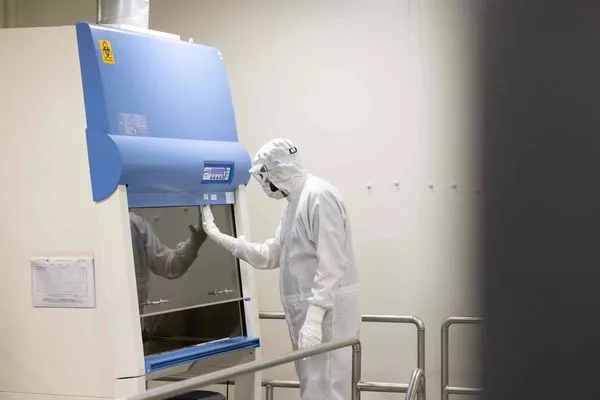
Disinfection is the process of killing or inactivating microorganisms on surfaces using a disinfectant. Each disinfectant has a specific contact time required to be effective.
To understand how disinfection works in practice, it’s important to clearly distinguish it from cleaning. The two are often confused, but they serve different purposes. Cleaning physically removes dirt and impurities, while disinfection destroys the microorganisms that remain on the surface after cleaning. In other words, you need both: without cleaning, effective disinfection isn’t possible.
Why is disinfection so critical in cleanrooms?
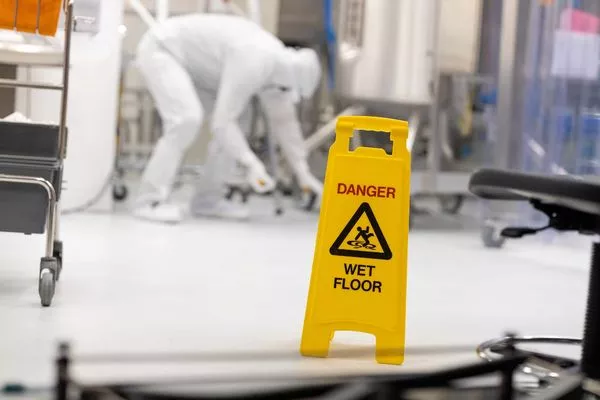
In controlled environments, even a minor microbial problem can have major consequences. It increases the risk of contamination and production loss, not to mention downtime, rework, and extra costs. It can also lead to negative audit results and compliance issues (GMP or ISO).
That’s why a well-structured and consistent disinfection approach is crucial. It’s a critical step in the process.
When does disinfection fail? The seven most common pitfalls
A disinfection process may seem logical on paper, but in practice, small mistakes in execution, timing, or product selection can significantly reduce its effectiveness.
These seven pitfalls are most common and more impactful than you might think:
- Disinfecting a surface that has not been thoroughly cleaned
- Not respecting the required contact time (surfaces drying too quickly or rinsed too soon)
- Using the wrong method or sequence (zones, cloths, workflows)
- Misusing products or switching them too quickly
- Insufficient training or guidance during execution
- Access and behavior undermining results (too much movement, gowning errors)
- Incomplete documentation, making it impossible to demonstrate process control
The TRU approach: audit-proof disinfection in five steps
1) Quick scan: what are the biggest risks?
Based on 15 targeted yes/no questions, you get a percentage score. A low score immediately highlights your action points.
2) Tailored cleaning and disinfection program
TRU develops a robust program based on an in-depth analysis of:
- responsibilities and roles
- tasks and frequencies
- materials, products, and methods
- sequence per zone (to prevent cross-contamination)
3) Execution by trained specialists + quality checks
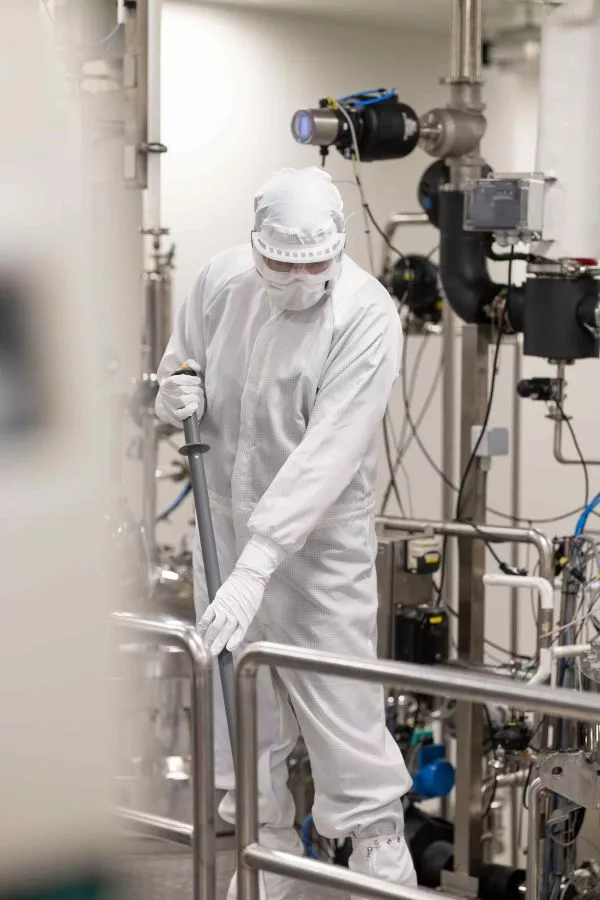
We select the right people for the job, support your team on site, and monitor everything through quality checks. If someone is unavailable, we make sure a trained backup is always ready.
4) Validation and documentation
You don’t just want to do a good job; you want to prove it. Through consultancy, we support you with cleaning advice, cleanroom cleaning validation, and cleanroom audits.
5) Training, so your disinfection approach remains effective
Disinfection is also about behavior. At the TRU Academy, you train your team in cleanroom behavior, workflows, and proper execution.
How can we help? Choose your approach!
Whether you want to roll out a full program right away, prepare your company for an audit, or strengthen your team, TRU partners with you at every stage. Choose the level of support that fits your needs and build a structured, audit-proof disinfection approach step by step.
Option 1: you want to implement a full program immediately and establish a solid structure
Choose TRU Critical Cleaning:
- cleaning and disinfection program
- execution by trained professionals
- quality control and continuity
Option 2: you want assurance first, a second opinion, or to become audit-proof
Choose TRU Consultancy:
- free scan to score
- in-depth audit and follow-up
- validation and optimization of procedures
Option 3: you want a more self-sufficient team
Choose TRU Academy:
- tailored training
- focus on behavior, workflows, and execution
When should you bring in external expertise?
Do any of these situations sound familiar? Then external expertise isn’t a luxury, it’s a smart investment that will save you time and audit stress!
- You want to address audit findings or take a proactive audit approach
- You’re starting with a new cleanroom, process, or product
- You notice recurring deviations or “mystery contamination”
- You want to move from person-dependent work to standardized processes
- Your cleaning team is strong internally but lacks time/structure for consistency
- You want to improve validation, trending, and documentation
OptimaT & TRU: a value-driven partnership
“A cleanroom must be cleaned with great precision. That’s why we rely on the best partner.”
Frequently asked questions about disinfection
What is the difference between cleaning and disinfection?
Cleaning removes visible dirt. Disinfection targets microorganisms. Both are essential.
How important is contact time?
Critical. Without sufficient contact time, a disinfectant cannot do its job. A quick spray and immediate rinse is not enough.
How do you prevent cross-contamination during disinfection?
By standardizing zones, sequences, and material usage. And by training your team accordingly. This includes working from clean to less clean areas, fixed wiping methods, and clearly defined workflows.
How do you prepare for audits related to disinfection?
Ensure clear procedures, defined measurement and control points, complete logbooks, and proper training. You can also have your approach assessed through an audit or validation.
What training does your team need?
That depends on your processes and risks. Start by doing our scan, then we can set up a tailored training at TRU Academy.