



GMP-compliant cleanroom cleaning
A cleanroom can look spotless and still fail to meet GMP standards. That’s because GMP-compliant cleaning goes beyond what you can see. It’s a controlled, verifiable process that helps you keep contamination risks under control, day after day.
It brings together risk assessment, clear procedures, trained staff, suitable materials, validation, monitoring, and detailed documentation. TRU Global Solutions helps you turn those requirements into a practical cleaning process that works on paper and on the cleanroom floor.
Want to know where your current cleaning process could be stronger?
What is GMP?
GMP stands for Good Manufacturing Practice—a set of quality requirements designed to control risks such as contamination, human error, and deviations in the production process.
GMP covers the entire production process, from facilities, equipment, and personnel to procedures, quality control, and documentation. It’s not something you check off your list right before an audit; it’s a work method you follow (and document) every day.

What does this mean for cleanroom cleaning?
GMP-compliant cleaning is essential for keeping contamination under control. A mistake in a cleaning procedure, the wrong use of materials, or an employee who hasn’t been properly trained can compromise the cleanroom environment.
That’s why cleanroom cleaning must be treated as a critical, controlled process. Cleaning correctly is only part of the job. You also need to be able to show who did what, which procedure they followed, which materials they used, and the results of their actions. This record needs to be reliable and match exactly what happened.

Every cleanroom needs its own approach
No two cleanrooms are the same. The right cleaning procedure depends on the cleanroom classification and the processes carried out. Critical areas and surfaces, potential contamination risks, and previous monitoring results also play a role.
GMP-compliant cleaning is part of the broader Contamination Control Strategy (CCS), which brings together all the measures designed to control contamination. This integrated approach is a key part of GMP Annex 1, the European GMP guideline for manufacturing sterile medicinal products.
Annex 1 requires critical control points and risks to be considered together, monitored, and regularly reviewed. It places a strong emphasis on risk management, contamination control, cleaning, disinfection, validation, and monitoring.
The key building blocks of GMP-compliant cleaning
A GMP-compliant cleaning process is a controlled approach built around several key elements. It also needs to be consistent and easy to repeat.
1. Clear procedures
Every cleaning task should follow a clear procedure tailored to the room, the classification, and the risks involved. This procedure specifies the methods, materials, products, frequency, and required documentation. Just as importantly, it needs to be practical and workable in practice.
2. Cleaning and disinfection
Cleaning removes dirt, residue, and contamination, while disinfection reduces or inactivates microorganisms. They’re two different processes, but both are essential. Proper cleaning is a crucial first step that allows the disinfectant to do its job effectively.
Read more about the difference between cleaning and disinfection
3. Suitable materials and products
Not every cleaning agent or material is suitable for every cleanroom. The right choice depends on factors like the cleanroom classification, the surface, the contamination risks, and the cleaning and disinfection methods. Materials and products also need to be stored, prepared, and transferred correctly.
4. Trained staff
Even the best procedure only works if employees know how to follow it correctly. That’s why they need both general knowledge of GMP and cleanrooms and a thorough understanding of the site-specific procedures. Regular refresher courses are also essential.
TRU uses competency and training matrices to track which employees have been trained for specific tasks and locations for each customer.
5. Validation
Writing down a procedure is one thing. Proving that it works is another. Validation demonstrates that the chosen method consistently delivers the desired result when carried out correctly. Have the products, materials, rooms, or processes changed? If so, you may need to conduct a new risk assessment or revalidate the procedure.
6. Reliable documentation
With GMP-compliant cleaning, it’s not enough to perform an activity correctly. You also need to document it correctly. Reliable, traceable documentation shows exactly what was done, when and where it was done, who did it, and which products were used.
TRU’s digital platform keeps all cleaning and disinfection activities clearly documented. It gives you one central place to store and track tasks, schedules, records, approvals, and changes.
Discover how digital documentation and quality control can help you stay GMP-compliant
7. Monitoring and continuous improvement
GMP-compliant cleaning isn’t a static process. Results from inspections, environmental monitoring, deviations, and audits allow you to continuously evaluate and improve your approach. If the same deviations keep occurring, it’s important to do more than correct the immediate problem. You also have to address the underlying cause.
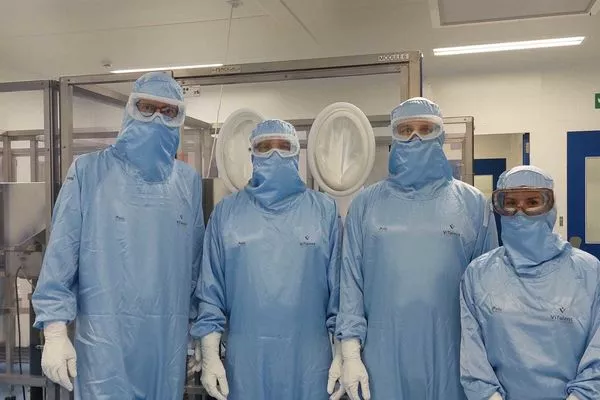
Does every cleanroom have to be GMP-compliant?
Not necessarily. Cleanroom classification and GMP aren’t the same thing. An ISO classification primarily focuses on the concentration of airborne particles. GMP-compliant cleaning is part of a broader quality system that also sets requirements for processes, employees, behavior, documentation, validation, monitoring, and contamination control.
Which regulations apply to you? That depends on your industry, products, manufacturing activities, and target market. Annex 1 focuses specifically on sterile medicinal products, but some of its principles can also be applied in other critical environments. In that case, the choices you make need to be clearly supported and justified.

How can TRU help you with GMP-compliant cleaning?
TRU combines specialized cleanroom cleaning with consulting, validation, audits, and training. This means we can help you develop a reliable cleaning process and carry it out correctly every day.
- Cleaning by specialized teams - Looking to outsource your cleanroom cleaning? TRU has dedicated and highly trained teams supported by operations managers, quality checks, backup staff, and regular reviews.
- Analysis and advice - We evaluate your current cleaning process, taking into account your procedures and documentation and how they’re applied in practice. A risk and gap analysis helps us identify potential shortcomings and areas for improvement.
- Procedures and cleaning programs - We advise you on the right materials, methods, frequency, and sequence of tasks. If needed, we can also help you develop or improve your procedures.
- Cleaning validation - We help you set up and carry out cleaning validation to demonstrate that your cleaning process is effective and repeatable.
- Training and qualification - At the TRU Academy, we train both our own staff and your team in GMP-compliant cleaning, cleanroom behavior, cleaning techniques, and site-specific procedures.
- Digital documentation and follow-up - Your cleaning activities and records are tracked digitally. This keeps all your information in one central place and helps you stay prepared for quality inspections, changes, and audits.
From a clean result to a controlled process
As you can see, GMP-compliant cleaning involves much more than cleaning alone. It’s a process that needs to be carried out correctly and traceably every single time. TRU helps you take control of that process and keep it on track—from risk assessments and procedures to training, implementation, documentation, and follow-up.
Would you like us to assess your current cleaning approach, or are you looking for a specialized partner to take over the work for you?
Frequently asked questions about GMP
What does GMP-compliant cleaning mean?
GMP-compliant cleaning is a controlled cleaning approach that meets the applicable GMP requirements and addresses the specific risks of a cleanroom. It’s not just about how the cleaning is carried out. Procedures, training, monitoring, and traceable documentation are just as important.
Is a visibly clean cleanroom GMP-compliant?
Not necessarily. Most particles and microorganisms can’t be seen with the naked eye. What’s more, GMP doesn’t just look at the cleaning result, it also considers how that result was achieved and how it can be demonstrated.
What’s the difference between cleaning and disinfection?
Cleaning removes dirt, residues, and contamination. Disinfection reduces or inactivates microorganisms. Proper cleaning is essential for a disinfectant to work effectively.
How often should a cleanroom be cleaned?
There’s no one-size-fits-all answer. The right frequency depends on the cleanroom classification, the activities carried out, the contamination risks, and the monitoring results.
Does GMP apply to every cleanroom?
Not every cleanroom needs to comply with GMP regulations. Depending on the industry, product, and activities involved, ISO standards or other specific requirements may apply instead.
Can cleanroom cleaning be outsourced?
Cleanroom cleaning can absolutely be outsourced to a specialized partner. Just make sure that responsibilities, procedures, training, documentation, and quality controls are clearly defined.
How does TRU support GMP-compliant cleaning?
TRU supports companies and organizations with services including risk and gap analyses, procedures, cleaning validation, training, specialized cleaning teams, and digital documentation and follow-up.